

Belonging, Inclusion, and Effective Education for Individuals with Cognitive and Intellectual Disabilities
October 17, 2025 @ 9:00 am - 12:00 pm
Belonging, Inclusion, and Effective Education for Individuals with Cognitive and Intellectual Disabilities
Friday, October 17, 2025
Registration 8:30am Program 9am to 12pm
Presented By: Rosemarie Manfredi, Psy.D.
Location: Online Workshop
***Deadline to register is October 15, 2025 at 9am***
3 CE Credits
Act 48 Available
This presentation will focus on ways to foster meaningful inclusion and belonging for individuals with cognitive and intellectual disabilities within the academic setting. The first hour will review the historic conceptualizations of cognitive and intellectual disability, starting with the medical model, moving to the social model, and then to current conceptualizations of neurodiversity. The second hour will cover principles of effective instruction, based on principles from neuropsychology and neuroscience, as well as Universal Design for Learning (UDL) principles. The third hour will discuss how to apply these principles in the academic setting to assist with fostering belonging and inclusion for individuals with cognitive and intellectual disabilities.
Objectives:
- Describe the medical, social, and neurodiversity models of disability and the pros and cons of each.
- List at least 2 strategies that can be implemented in the academic setting to promote inclusion and participation of students with cognitive and intellectual disabilities.
- Evaluate current educational practices to determine whether they are inclusive or how they can be modified to be more inclusive.
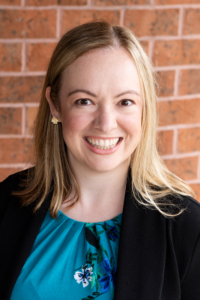 Dr. Rosemarie Manfredi has a doctorate in clinical psychology, with concentrations in school psychology and neuropsychology. Her internship training included rotations at a private practice in neuropsychology and the Department of Neurology at St. Christopher’s Hospital for Children. Dr. Manfredi completed a postdoctoral fellowship in the Center for Autism Research at the Children’s Hospital of Philadelphia (CHOP), where she was a LEND (Leadership Education in Neurodevelopmental Disabilities) fellow. After completing her fellowship, she took a faculty position at Chestnut Hill College, where she developed a post-bachelor’s certificate program focused on adults with autism spectrum disorders, taught classes on autism spectrum disorders and the assessment of neurodevelopmental disorders in the master’s and doctoral psychology departments, and served as the Training Director for the APA-accredited doctoral internship consortium. While at Chestnut Hill College, Dr. Manfredi also remained active in clinical work, serving as a consultant to several local organizations. After leaving her academic position, she opened Neurodevelopmental Assessment and Consulting, LLC while also working on projects related to selective mutism and conducting autism evaluations at the AJ Drexel Autism Institute. She has been in private practice full-time since 2019.
Outside of work, Dr. Manfredi can be found spending time with her family, including her husband and two children, working out, dancing, or reading. She is the parent to a child who was born premature, as well as a child with Down Syndrome. As such, Dr. Manfredi is acutely aware of the strengths and challenges facing individuals and families affected by neurodevelopmental conditions, which allows her to approach her evaluation and consultation activities with a level of empathy, understanding, and knowledge that only results from personal experience. Her professional approach, informed and shaped by these personal experiences, values the dignity and abilities of all people.
PSCP: The Psychology Network is approved by the American Psychological Association to sponsor continuing education for psychologists. PSCP: The Psychology network maintains responsibility for this program and its content.